Why Retirement Tax Planning Matters Now More Than Ever
Planning for retirement is no longer just about saving money, but rather about maximizing the money saved. As we move into 2026, tax-efficient retirement planning has become one of the smartest financial moves you can make. The difference between paying taxes strategically and ignoring them could mean thousands — or even hundreds of thousands — of dollars over your lifetime.

Let's discuss some real-world retirement tax strategies that you can implement in 2026 with scenarios that you can actually relate to.
💡 The Impact of Tax-Advantaged Savings:
A 35-year-old individual contributing $23,500 to a 401(k) plan at a 24% tax bracket saves $5,640 in taxes THIS YEAR. This individual's contribution will be worth $178,860 in 30 years with a 7% return, all of which is tax-deferred. Effective retirement tax planning can save you hundreds of thousands of dollars in lifetime taxes.
Traditional vs. Roth: Selecting the Appropriate Account Type
Choosing the right account type between traditional (tax-deferred) and Roth (tax-free) is one of the most important components of retirement planning.
| Features | Traditional 401(k)/IRA | Roth 401(k)/IRA |
|---|---|---|
| Contributions | Pre-tax (reduces current taxable income) | After-tax (no current tax benefit) |
| Tax Benefits | Save taxes NOW | Save taxes LATER |
| Withdrawals | Fully taxable as ordinary income | 100% tax-free (after age 59½) |
| RMDs Required? | Yes, starting at age 73 | No RMDs for Roth IRAs |
| Best For | High earners expecting lower retirement income | Young earners expecting higher future income |
💰 Real-World Comparison: Traditional vs Roth 401(k)
Traditional and Roth 401(k) plans can have a huge effect on your retirement income. Let's analyze this with a real-life example and see how taxes affect the difference.
👩 Sarah — Traditional 401(k)
How It Works
Contributions are made on a pre-tax basis, which lowers taxable income. Withdrawals in retirement are subject to income tax.
At Age 40
- Contributes: $23,500
- Tax savings (24%): $5,640
- Effective cost: $17,860
At Age 65
- Balance (25 yrs @ 7%): $178,000
- Withdraws 4% annually: $7,120
- Taxes at 22%: $1,566/year
👨 John — Roth 401(k)
How It Works
Contributions are made with after-tax dollars, but withdrawals in retirement are completely tax-free.
At Age 40
- Contributes: $23,500 (after-tax)
- Pre-tax income needed: $30,921
- Tax cost (24%): $7,421
- No tax savings today.
At Age 65
- Balance (25 yrs @ 7%): $178,000
- Withdraws 4% annually: $7,120
- Taxes: $0
2026 Retirement Contribution Limits: Max Out Your Savings
The IRS changes the contribution limits each year to account for inflation. For 2026, the contribution limits have risen substantially, giving you more chances to lower your taxable income and accumulate wealth in your retirement accounts.
📊 2026 Retirement Account Contribution Limits
| Account Type | Standard Limit | Catch-up (Age 50+) | Total Possible |
|---|---|---|---|
| 401(k), 403(b), 457 | $23,500 | $7,500 | $31,000 |
| Traditional/Roth IRA | $7,000 | $1,000 | $8,000 |
| SIMPLE IRA/401(k) | $16,000 | $3,500 | $19,500 |
| SEP IRA | $69,000 (25% of comp.) | N/A | $69,000 |
| Solo 401(k) (Self-Employed) | $69,000 | $7,500 | $76,500 |
- 401(k) Contributions: Must be made by December 31, 2026
- IRA Contributions: Can be made until April 15, 2027 for the 2026 tax year
Advanced IRA Strategies for Tax Optimization
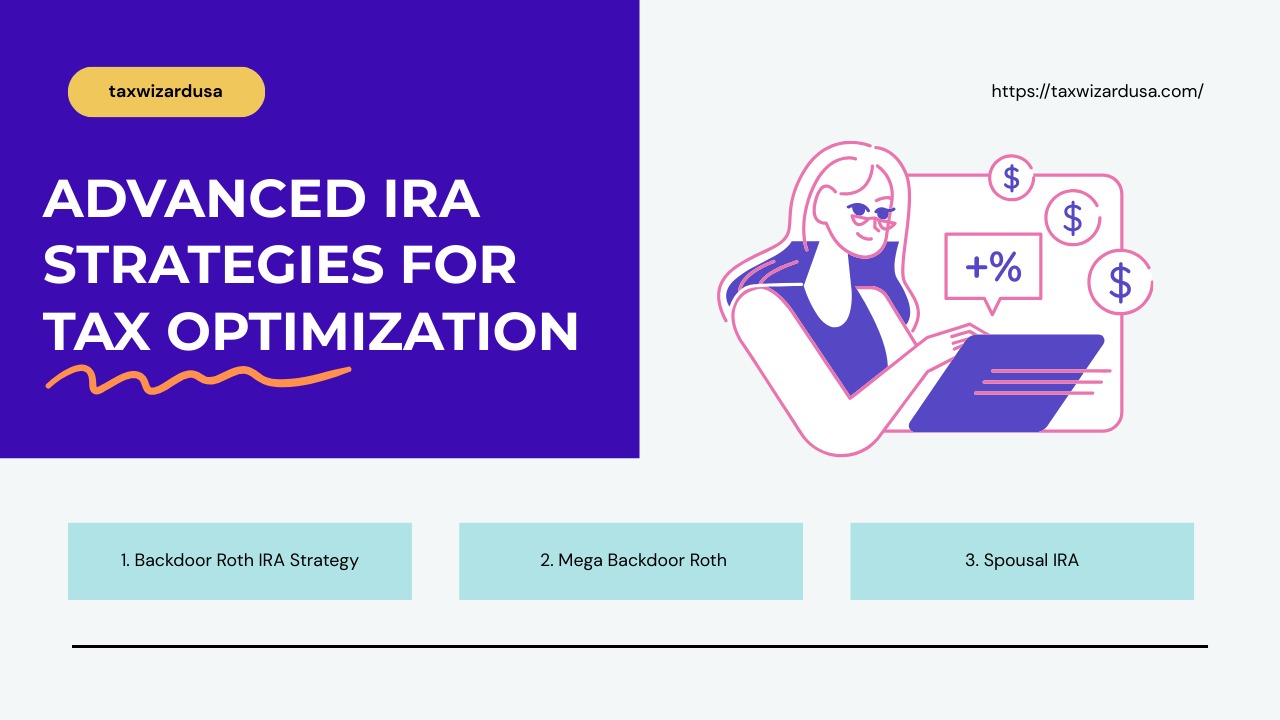
1. Backdoor Roth IRA Strategy
High earners who exceed Roth IRA income limits ($161,000 single, $240,000 married in 2026) can use the backdoor strategy:
- 1Contribute $7,000 to a traditional IRA (non-deductible)
- 2Immediately convert to a Roth IRA
- 3Pay taxes only on earnings (minimal if immediate)
- 4Now have a Roth IRA growing tax-free forever!
2. Mega Backdoor Roth (After-Tax 401k Contributions)
If your company 401(k) plan permits after-tax contributions, you can contribute more than the $23,500 limit:
- Total 401(k) limit including employer match: $69,000 (2026)
- After contributing maximum pre-tax ($23,500) and employer match ($10,000)
- Contribute up to $35,500 after-tax
- Immediately convert to Roth 401(k) or roll over to Roth IRA
- Result: $35,500 now grows tax-free!
3. Spousal IRA
Unemployed spouses can contribute to an IRA based on the working spouse's income. This effectively doubles your IRA contributions!
- Working spouse IRA: $7,000
- Unemployed spouse IRA: $7,000
- Total: $14,000 per year
- Both over 50: $16,000 total with catch-up
Required Minimum Distributions (RMDs): Rules and Strategies
RMDs require you to withdraw and pay taxes on traditional retirement accounts beginning at age 73 (increased from 72 in 2023). RMDs are essential to understand and plan for to optimize retirement taxes.
📋 2026 RMD Rules
- Age 73: RMDs apply to those born 1951–1959
- Age 75: RMDs apply to those born in 1960 or later (in 2033)
- Fine: 25% of the amount not withdrawn (reduced from 50%)
- Due Date: December 31 each year (April 1 for first RMD only)
| Age | Distribution Period | RMD % of Balance | Example: $500,000 Balance |
|---|---|---|---|
| 73 | 26.5 | 3.77% | $18,868 |
| 75 | 24.6 | 4.07% | $20,325 |
| 80 | 20.2 | 4.95% | $24,752 |
| 85 | 16.0 | 6.25% | $31,250 |
| 90 | 12.2 | 8.20% | $40,984 |
HSA: The Hidden "Triple Tax-Advantaged" Retirement Account
Health Savings Accounts (HSAs) are frequently underappreciated as retirement savings options, but they provide the STRONGEST tax advantages of any account — even stronger than 401(k)s and IRAs!
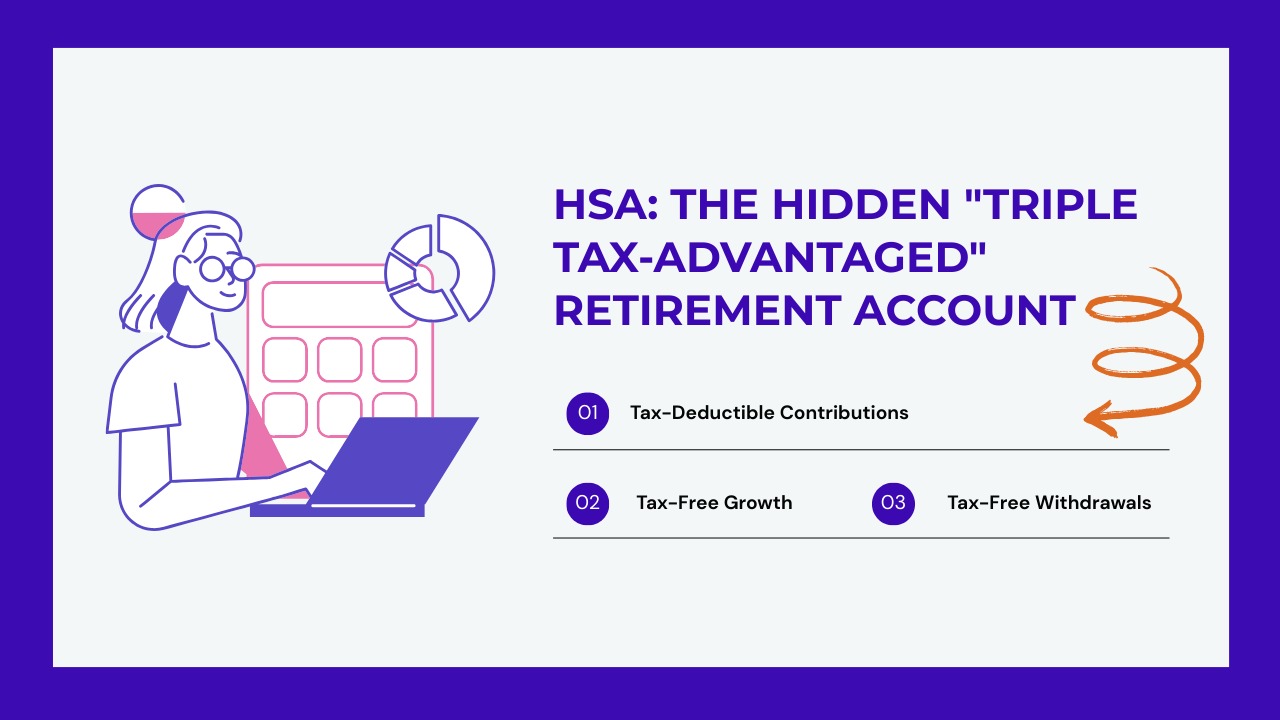
🏆 Triple Tax Advantage
Tax-Deductible Contributions
Deducts from your current taxable income right away
Tax-Free Growth
No taxes on investment earnings inside the account
Tax-Free Withdrawals
For qualified medical expenses at ANY age — zero taxes
📊 2026 HSA Contribution Limits
| Coverage Type | Contribution Limit | Catch-Up (55+) | Total |
|---|---|---|---|
| Individual | $4,300 | $1,000 | $5,300 |
| Family | $8,550 | $1,000 | $9,550 |
🎯 HSA as a Retirement Plan:
- Pay medical bills directly: Contribute to HSA tax-free
- Save receipts indefinitely: Pay yourself back in 30 years, tax-free!
- After age 65: Withdraw for ANY purpose (subject to income tax, like a traditional IRA)
- For qualified medical expenses: Tax-free forever, even after age 65
- No RMDs: No required withdrawals, unlike traditional IRAs
Catch-Up Contributions: Supercharge Retirement Savings After 50
If you are 50 or older, the IRS permits "catch-up contributions" to help you build retirement savings faster in your peak earning years.

📊 2026 Catch-Up Contribution Amounts
| Account Type | Standard Limit | Catch-Up (50+) | Total Limit | Tax Savings (24%) |
|---|---|---|---|---|
| 401(k)/403(b)/457 | $23,500 | $7,500 | $31,000 | $7,440 |
| IRA (Traditional/Roth) | $7,000 | $1,000 | $8,000 | $1,920 |
| SIMPLE IRA | $16,000 | $3,500 | $19,500 | $4,680 |
| HSA (55+) | $8,550 (family) | $1,000 | $9,550 | $2,292 |
Your 2026 Retirement Tax Strategy Action Plan
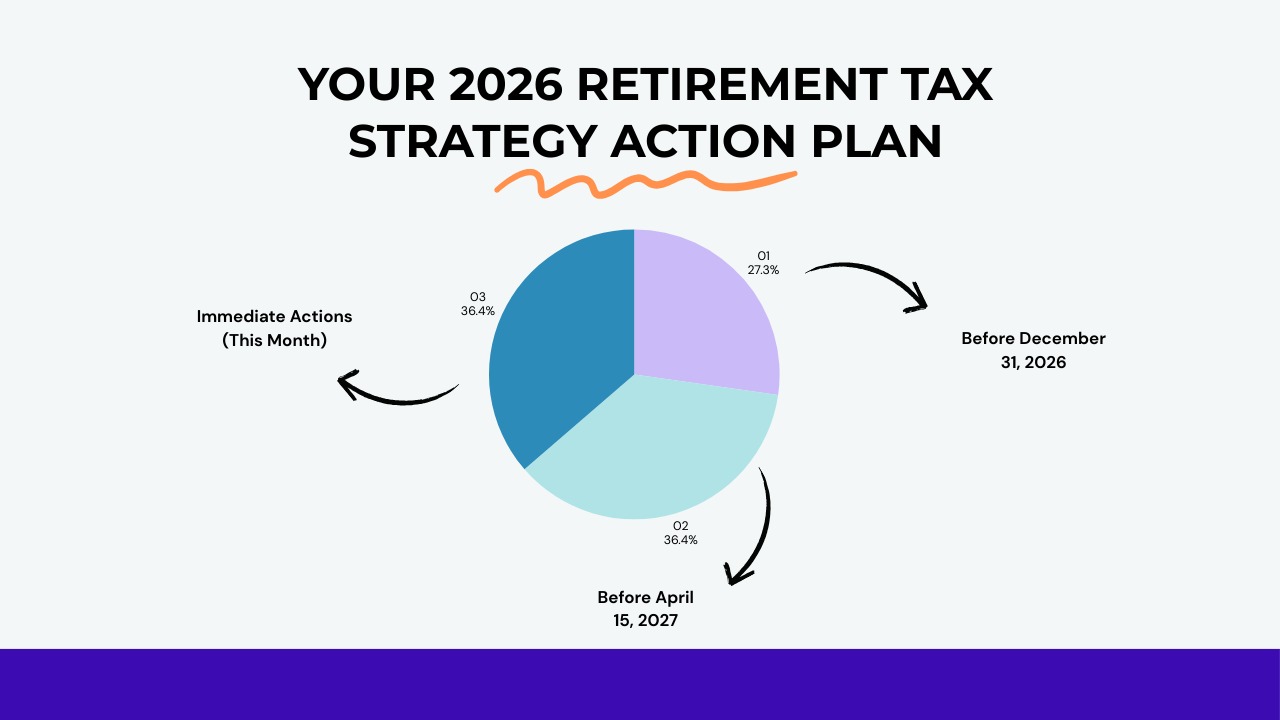
⚡ Immediate Actions (This Month):
- Determine your 2026 contribution limits by age
- Enroll in automatic payroll deductions to contribute the maximum to a 401(k)
- Open an HSA if you have a high-deductible health plan
- Determine whether traditional or Roth contributions are best for your tax bracket
- Use our tax calculator to estimate tax savings
📅 Before December 31, 2026:
- Contribute the maximum to 401(k) ($23,500 or $31,000 if age 50+)
- Contribute the maximum to HSA ($4,300 individual or $8,550 family)
- Perform a Roth conversion if you had a low-income year
- Take RMDs if required (age 73+)
- Make QCD (Qualified Charitable Distribution) if age 70½+
- Contribute to an IRA for 2026 (up to $7,000 or $8,000 if age 50+)
🗓️ Before April 15, 2027:
- Make 2026 IRA contributions (up to $7,000 or $8,000 if age 50+)
- Complete any backdoor Roth conversions
- Finish any prior-year Roth conversions
🧮 Ready to Calculate Your Taxes?
Use our free federal income tax calculator to see how these retirement strategies impact your 2026 tax liability and maximize your savings.
Calculate Your Federal Taxes →