
What are tax credits and why do they matter?
Tax credits are considered one of the strongest ways to lower your tax bill. Unlike deductions, which only reduce your taxable income, tax credits provide a dollar-for-dollar reduction of the amount of tax owed. Knowing and claiming all the credits you're eligible for may make the difference between taxes owed and a hefty refund.
Tax Credits vs. Tax Deductions: Know the Difference
| Features | Tax Credits | Tax Deductions |
|---|---|---|
| Impact | Dollar-for-dollar reduction in tax owed | Reduces taxable income |
| Value | Same for everyone | Depends on your tax bracket |
| Example | $1,000 credit = $1,000 less tax | $1,000 deduction = $220 less tax (22% bracket) |
| Refundability | Some credits are refundable | Never refundable |
1. Child Tax Credit (CTC) — Worth Up to $2,000 Per Child
2026 CTC Details
- Credit Amount: $2,000 for each qualifying child
- Refundable Portion: Up to $1,600
- Age Limit: Under 17 at end of year
- Phase-out starts: $200,000 (Singles), $400,000 (Married)
Who Qualifies?
| ✅ Your child, stepchild, or foster child |
| ✅ Under age 17 on Dec 31, 2026 |
| ✅ Dependent on your tax return |
| ✅ U.S. Citizen or Resident Alien |
| ✅ Lived with you for more than half the year |
💰 Real-World Example: Family with 3 Children
Scenario:
Married filing jointly
- Household Income: $85,000
- Children: 3 qualifying children (ages 8, 12, 15)
Step 1: Calculate Initial Tax Liability
Assume their calculated federal income tax, after application of the standard deduction:
- Tax payable before credits: $6,850
Step 2: CTC Application
The Child Tax Credit provides up to $2,000 for each qualifying child.
- 3 kids × $2,000 = $6,000 total credit
Step 3: Compare with Payroll Withholding
- Total withholding (full year): $7,500
Final Result
- Total tax reduction from credits: $6,000
- Final tax owed after credits: $850
- Expected Tax Refund: $6,650
2. Earned Income Tax Credit (EITC) — Up to $7,830 for Families
The EITC is a powerful and fully refundable tax credit intended to help low- and moderate-income workers. Even if you do not owe any income tax, you qualify to receive the total refund.
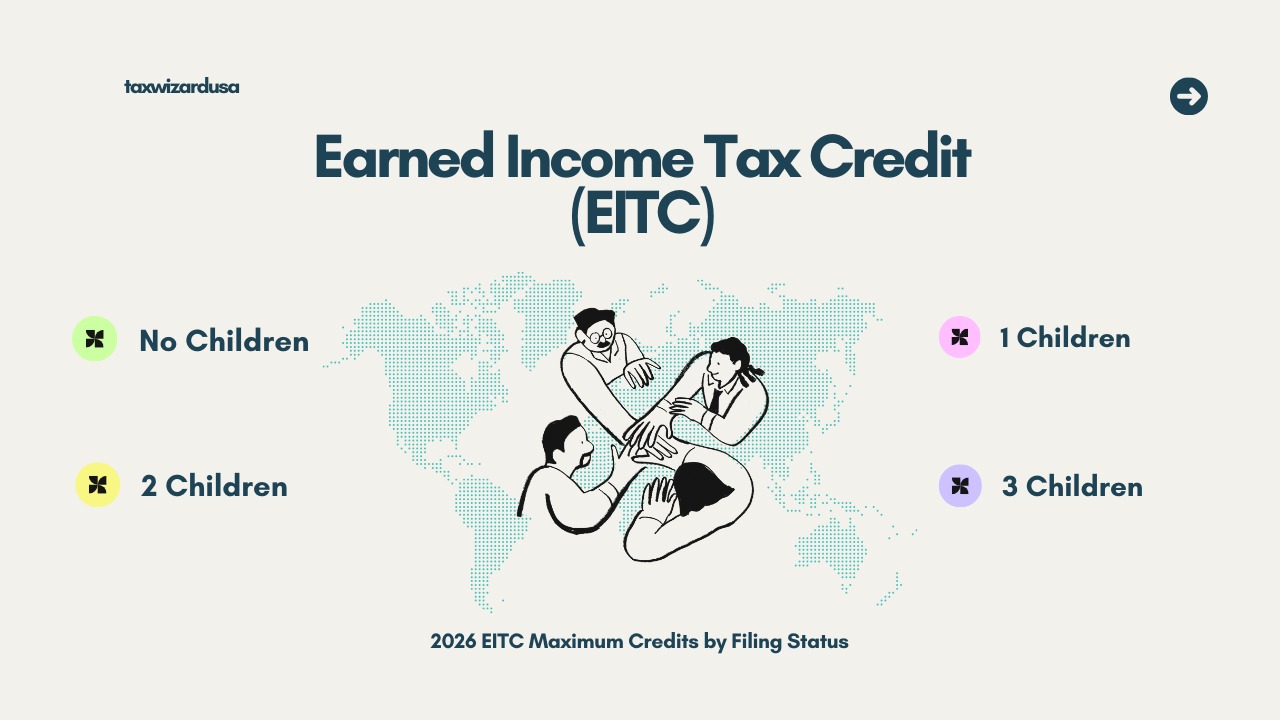
2026 EITC Maximum Credits by Filing Status
| Number of Children | Maximum Credit | Income Limit (Single) | Income Limit (Married) |
|---|---|---|---|
| No children | $632 | $18,591 | $25,511 |
| 1 child | $4,213 | $49,084 | $56,004 |
| 2 children | $6,960 | $55,768 | $62,688 |
| 3+ children | $7,830 | $59,899 | $66,819 |
- Must have earned income from employment or self-employment
- Investment income must be $11,600 or less
- Must file a tax return (even if not otherwise required)
- Cannot use "Married Filing Separately" status
💡 Real Example: Single Parent with 2 Children
Maria's Situation
- Filing Status: Head of Household
- Annual Income: $42,000
- Children: 2 Qualifying Children (ages 6 and 9)
Step 1: Initial Tax Liability
- Federal income tax before credits: $1,850
Step 2: Apply Tax Credits
1. Child Tax Credit (CTC)
- 2 children × $2,000 = $4,000
2. Earned Income Tax Credit (EITC)
- Estimated eligibility: $5,920
Step 3: Final Tax Outcome
Since many of the credits are refundable, Maria will receive a refund even after her tax liability reaches zero.
- Credits: $9,920
- Minus tax owed: $1,850
(Any amounts withheld from earnings will be added to this refund.)
Final Result
- Initial tax owed: $1,850
- Total Tax Credits: $9,920
- Refund from credits: $8,070 (plus any withheld taxes)
3. Education Tax Credits — Save Up to $2,500 Per Student
Two major education credits can help offset the cost of higher education. You can only claim one per student per year.
American Opportunity Credit (AOTC)
Best for: First 4 years of college
- Maximum Credit: $2,500 per student
- Refundable: 40% (up to $1,000)
- Covers: Tuition, fees, books, supplies
Requirements:
- At least half-time enrollment
- Pursuing a degree
- No felony drug convictions
Lifetime Learning Credit (LLC)
Best for: Graduate school, continuing education
- Maximum Credit: $2,000 per return
- Refundable: Not refundable
- Covers: Tuition and fees only
Benefits:
- No limit on years claimed
- Part-time students qualify
- Non-degree courses eligible
- Single / Head of Household: $80,000 – $90,000
- Married Filing Jointly: $160,000 – $180,000
4. Energy Efficiency Tax Credits — Save on Home Improvements
The Inflation Reduction Act has extended energy efficiency tax credits for home improvements through 2032.
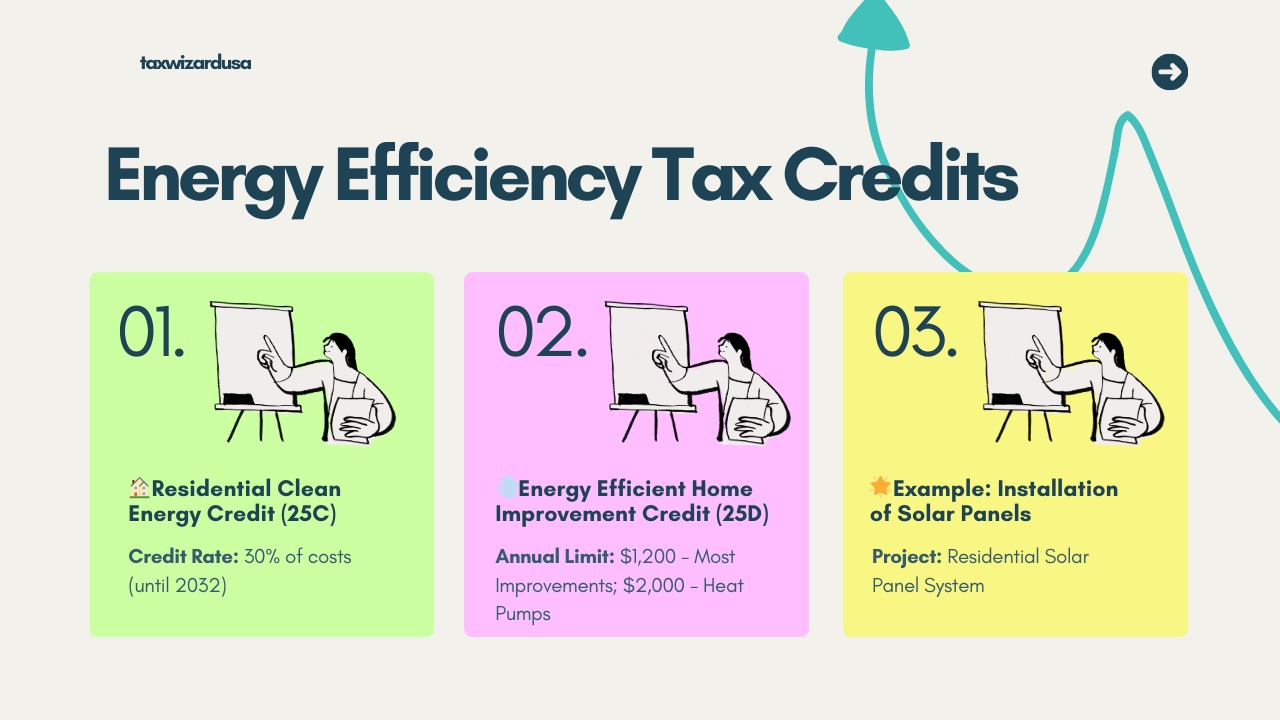
🏠 Residential Clean Energy Credit (25C)
- Solar Panels: 30% credit, no maximum
- Solar Water Heaters: 30% credit, no limit
- Geothermal Heat Pumps: 30% credit, no maximum
- Small Wind Turbines: 30% credit, no maximum
- Battery Storage: 30% credit (minimum 3 kWh capacity)
💨 Energy Efficient Home Improvement Credit (25D)
- Windows & Doors: Up to $600
- Insulation: 30% of cost (max $1,200)
- Central AC: Up to $600
- Heat Pumps: Up to $2,000
- Water Heaters: Up to $600
- Home Energy Audit: Up to $150
🌟 Example: Installation of Solar Panels
Project: Residential Solar Panel System
- Total Cost: $25,000
- Tax Credit (30%): $7,500
- Net Cost after Credit: $17,500
Plus: Monthly savings on electricity bills for 25+ years!
5. Retirement Savings Contributions Credit (Saver's Credit)
Get a credit for contributing to retirement accounts like 401(k), IRA, or 403(b) plans.
| Filing Status | AGI Range | Credit Rate | Max Credit |
|---|---|---|---|
| Single | $0 – $23,250 | 50% | $1,000 |
| $23,251 – $25,500 | 20% | $400 | |
| $25,501 – $39,500 | 10% | $200 | |
| Married Filing Jointly | $0 – $46,500 | 50% | $2,000 |
| $46,501 – $51,000 | 20% | $800 | |
| $51,001 – $79,000 | 10% | $400 |
Contribute to a traditional IRA or 401(k) to get both a tax deduction AND the Saver's Credit. This is especially valuable for moderate-income taxpayers.
6. Other Valuable Tax Credits for 2026
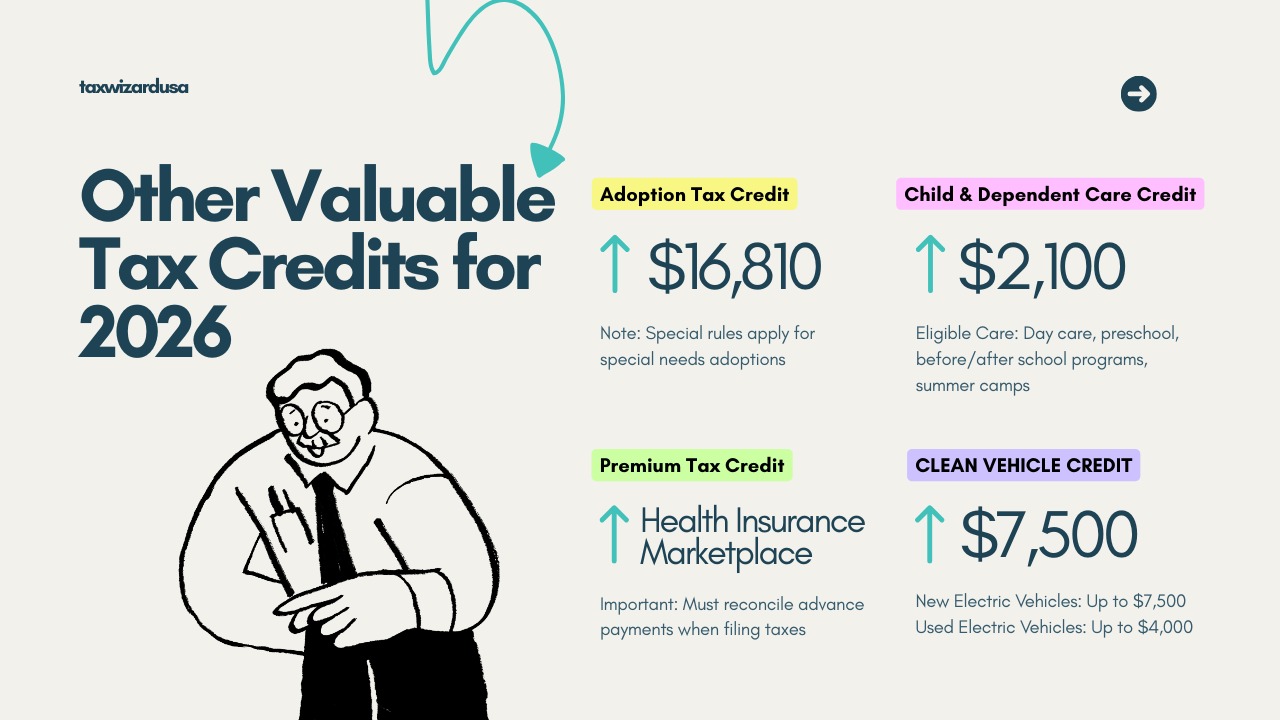
Adoption Tax Credit — Up to $16,810
- Maximum Credit: $16,810 per child
- Covers: Adoption fees, court costs, attorney fees, travel
- Phase-out begins at $252,150 AGI
- Special rules apply for special needs adoptions
Child & Dependent Care Credit — Up to $2,100
- Credit Rate: 20–35% of eligible expenses
- 1 dependent: Up to $3,000 in expenses
- 2+ dependents: Up to $6,000 in expenses
- Maximum Credit: $2,100 (35% × $6,000)
- Eligible: Day care, preschool, before/after school, summer camps
Premium Tax Credit — Health Insurance Marketplace
- Makes health insurance affordable through Healthcare.gov
- Credit paid directly to insurer or claimed on return
- Eligibility based on income and household size
- Important: Must reconcile advance payments when filing
Clean Vehicle Credit — Up to $7,500
- New Electric Vehicles: Up to $7,500
- Used Electric Vehicles: Up to $4,000
- Final assembly must be in North America
- MSRP limits: $80,000 (vans/SUVs/trucks), $55,000 (others)
- Income limits: $300k (married), $225k (HoH), $150k (single)
🎯 Strategies to Maximize Your Tax Credits
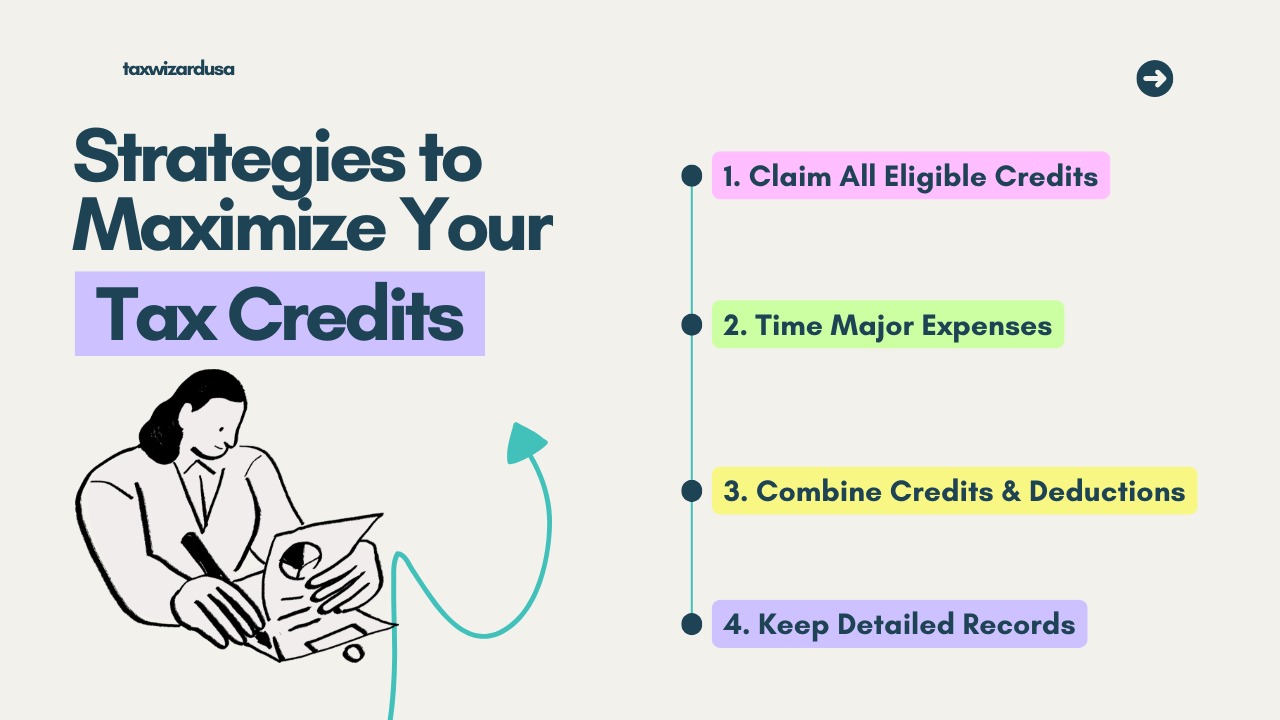
1. Claim All Eligible Credits
Many taxpayers pass up credits simply because they're not aware of them. Review all available credits every year, especially after any change in your personal or financial situation.
2. Time Major Expenses
Consider phasing education-related expenses, home improvements, or vehicle purchases in years when you have a larger tax liability to maximize the benefit of credits.
3. Combine Credits and Deductions
You may qualify for several credits simultaneously. For example, you can claim the Child Tax Credit and the Child Care Credit at the same time for maximum savings.
4. Keep Detailed Records
Retain receipts, Form 1098-T, childcare provider tax IDs, and energy efficiency certifications to substantiate your credit claims at tax time.
Take Action: Maximize Your 2026 Tax Credits
Tax credits can save you thousands of dollars. Don't leave money on the table!
📊 Calculate Your Taxes 💰 Find Your Tax Bracket