Tax season is around the corner, and millions of Americans will leave money on the table by not taking advantage of the deductions that they are eligible for. According to the IRS, the average taxpayer overpays between $500 and $1,000 annually due to unawareness of existing tax deductions.

These deductions apply to you whether you file as an employee, freelancer, or small business owner. The following deductions often go unclaimed, which can add up to a substantial reduction in your 2025 tax liability. Let's discuss each deduction individually.
📌 What Is a Tax Deduction?
A tax deduction is an expense that reduces your taxable income, which in turn reduces the amount of taxes you have to pay. The less taxable income you have, the less taxes you will pay.
1 Home Office Deduction
If you are a freelancer and you work from home, you are allowed to deduct some of your home office expenses. However, your home office must be regularly and exclusively used for your business.
📐 How to Calculate:
- Simplified Method: $5/square foot (up to 300 square feet = $1,500 maximum)
- Actual Method: Deduct percentage of mortgage/rent, utilities, insurance, and repairs based on office square footage versus total home size
- Example: 200 sq ft office in 2,000 sq ft home = 10% of home expenses
2 Student Loan Interest
You can deduct up to $2,500 in student loan interest you paid during the year, even if you don't itemize. This is an "above-the-line" deduction, which means you reduce your adjusted gross income (AGI).
📊 Income Limits (2025):
- Single filers: Phases out between $75,000–$90,000 AGI
- Married filing jointly: Phases out between $155,000–$185,000 AGI
3 State Sales Tax (for No-Income-Tax States)
If you are in a state with no income taxes — such as Alaska, Florida, Nevada, South Dakota, Tennessee, Texas, Washington, or Wyoming — you may deduct state and local sales taxes instead of state income taxes on your itemized return.
🔢 Two Methods:
- Actual Expenses: Keep receipts and deduct actual sales tax paid
- IRS Tables: Use the IRS-provided tables based on your income, family size, and state
4 Job Search Expenses
Although W-2 employees are no longer able to deduct job search costs, self-employed individuals can deduct business search costs:
- Resume/portfolio services
- Career coaching and professional development
- Networking event fees
- Traveling to meet potential clients
- LinkedIn Premium and job board subscriptions
5 Charitable Mileage
Most people know that you can deduct cash donations, but did you know that you can also deduct miles driven for volunteer work? The IRS has a reimbursement rate of 14 cents per mile driven for charitable purposes in 2025.

🚗 Qualifying Activities:
- Driving to volunteer at a soup kitchen
- Going to a charity with supplies
- Transportation for Meals on Wheels deliveries
- Driving to fundraising events as a volunteer
6 Health Savings Account (HSA) Contributions
Contributions to an HSA are considered one of the most tax-favored accounts. Contributions are tax-deductible, growth is tax-free, and withdrawals for medical purposes are tax-free — that's a triple tax advantage!
📋 2025 Contribution Limits:
- Individual coverage: $4,300
- Family coverage: $8,550
- Additional catch-up (55+): $1,000
7 Educator Expenses
Teachers who outlay their own money for school supplies may deduct up to $300, or up to $600 for married couples where both are teachers. This is an above-the-line deduction — no itemizing required.
✅ Qualifying Expenses:
- Books and classroom supplies
- Computer equipment and software
- COVID-19 protective items
- Athletic supplies needed by PE teachers
- Professional development courses
8 Self-Employment Tax Deduction
As a self-employed person, you have to pay the employee and employer portions of Social Security and Medicare taxes, which total 15.3%. The good news? You get to deduct half of that on your tax return.
💰 Example:
- Net self-employment income: $60,000
- Self-employment tax: ~$8,478
- Deductible amount: ~$4,239
- Tax savings (at 22% bracket): ~$932
9 Moving Expenses (Military Only)
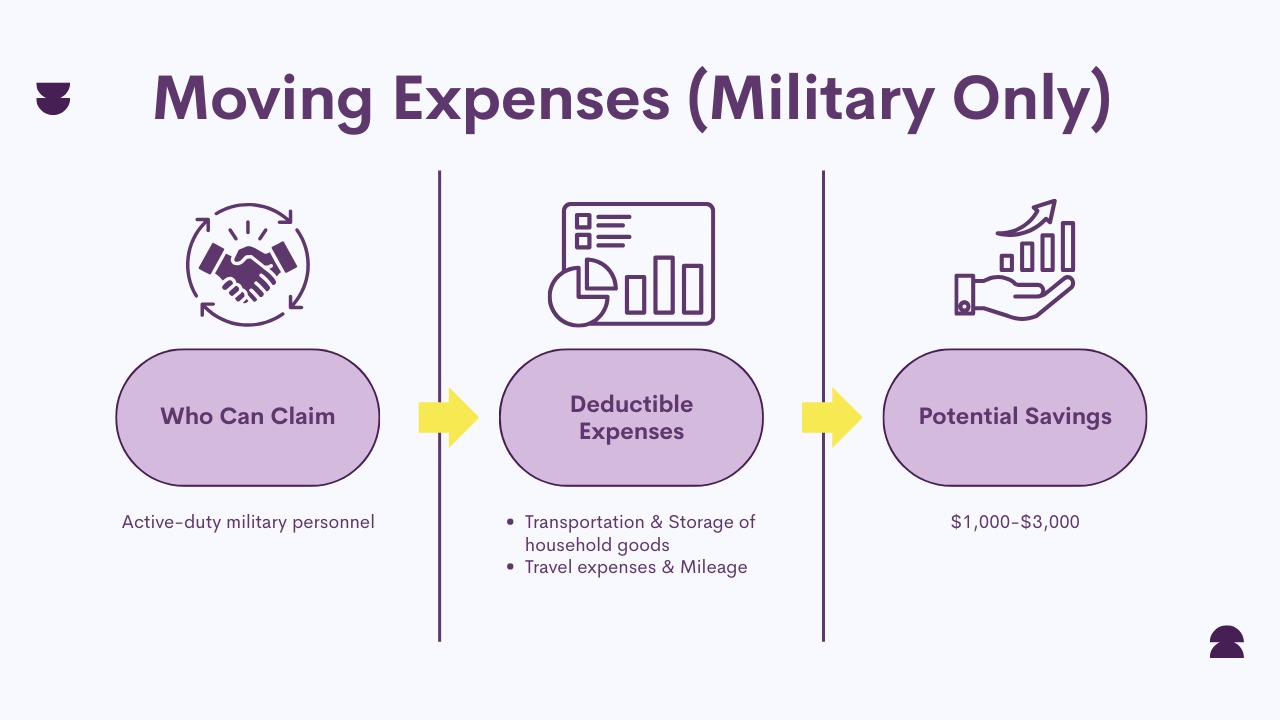
Although the moving expense deduction was repealed under the 2017 tax laws, active duty military members who are required to move due to a permanent change of station are allowed to deduct moving expenses.
📦 Deductible Expenses:
- Transportation and storage of household goods
- Travel expenses (lodging only — not meals)
- Mileage: 16 cents per mile for 2025
10 State Tax Refund (if you itemized last year)
This is a reverse deduction. If you itemized deductions the previous year and deducted state/local taxes, and you receive a state tax refund this year, you may need to report the refund as income. This is a commonly missed situation because it's a little counterintuitive.
📋 Record Keeping Tips
To claim these deductions in a tax-deductible way:
- Record receipts for all deductible expenses
- Keep a mileage log with dates and purposes
- Keep Form 1098-E, Form 1098-T, and charitable contribution records
- Record home office square footage with photos
- Keep records for at least 3 years after filing
🚀 BONUS Deductions Most People Miss
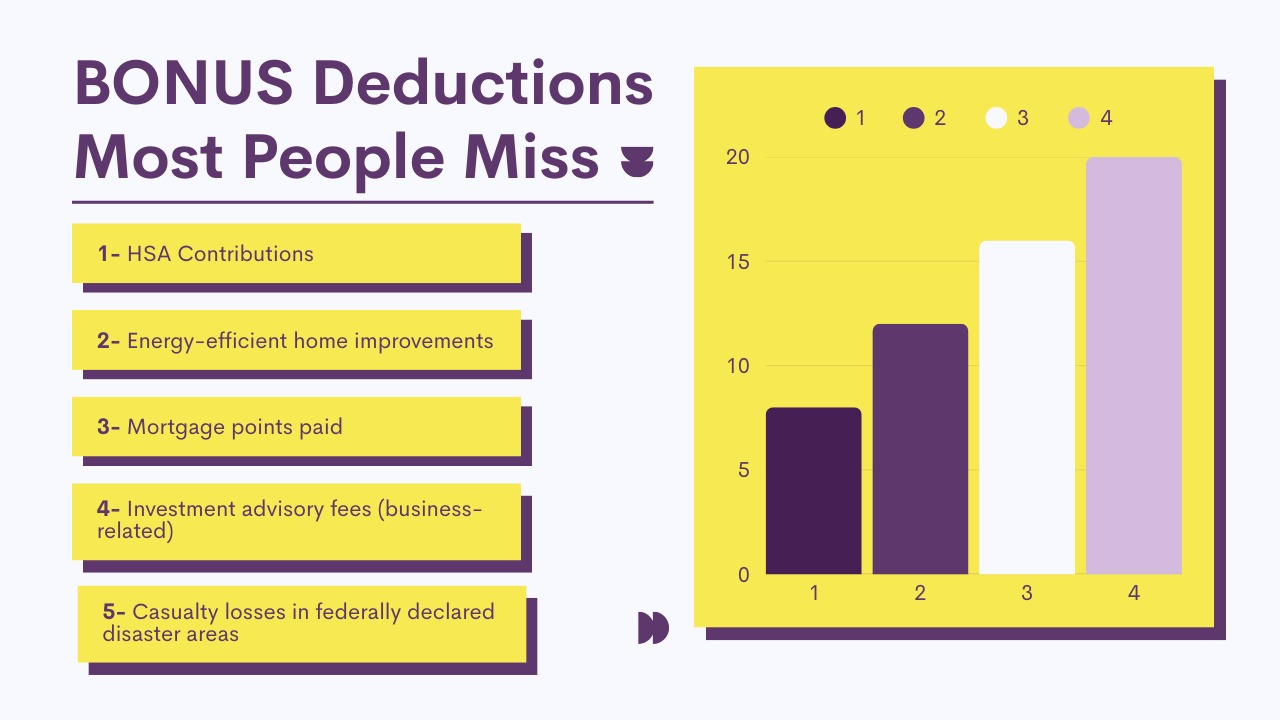
These are more deductions that people often forget about:
- HSA contributions (if not already claimed)
- Energy-efficient home improvements
- Mortgage points paid
- Investment advisory fees (business-related)
- Casualty losses in federally declared disaster areas
⚠️ Common Tax Mistakes to Avoid in 2025
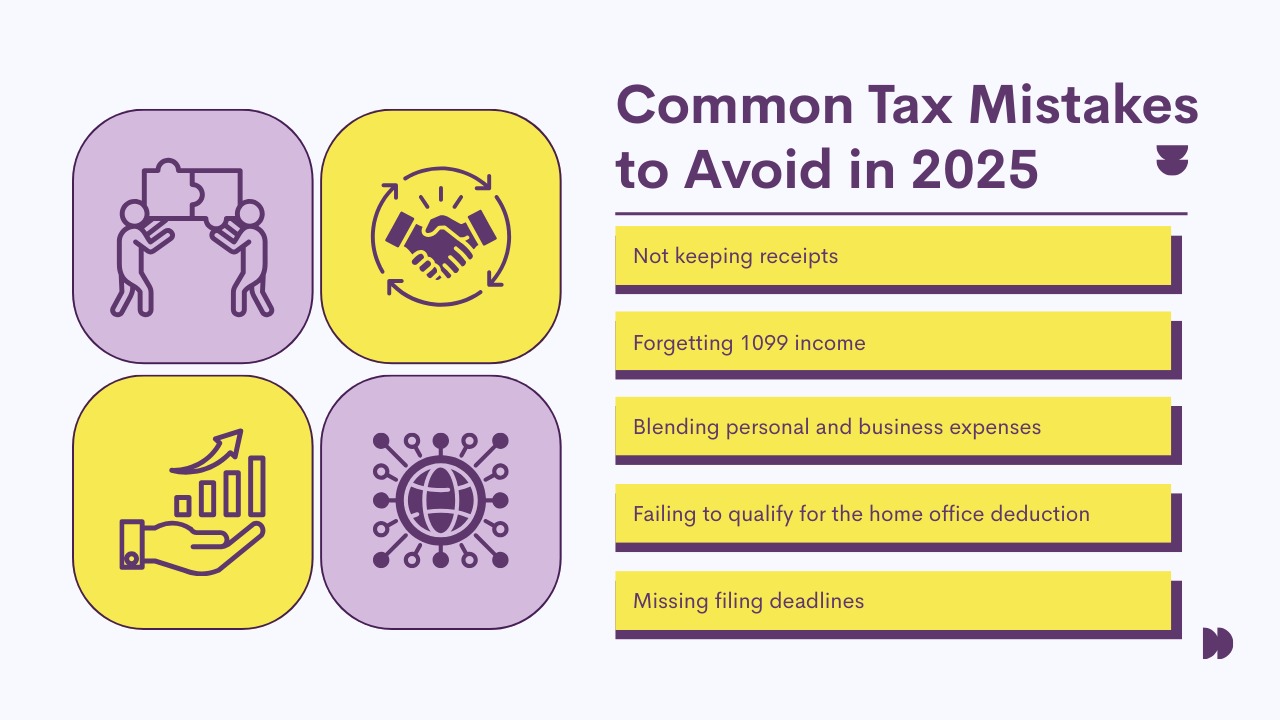
- Not keeping receipts
- Forgetting 1099 income
- Blending personal and business expenses
- Failing to qualify for the home office deduction
- Missing filing deadlines
Accuracy saves you from penalties and audits.
📊 Standard vs. Itemized Deduction (2025 Strategy)
Before you file, compare both options and choose the one that gives you the biggest decrease in taxable income:
✔ Standard Deduction
A fixed dollar amount based on your filing status. Simple, no receipts needed.
✔ Itemized Deductions
A detailed list of deductible expenses. Worth it when it exceeds the standard amount.
💰 Deductions vs. Credits — Know the Difference
Deductions lower your income.
They reduce the amount of income that is subject to tax.
Credits lower your tax liability.
They directly reduce the taxes you owe — dollar for dollar.
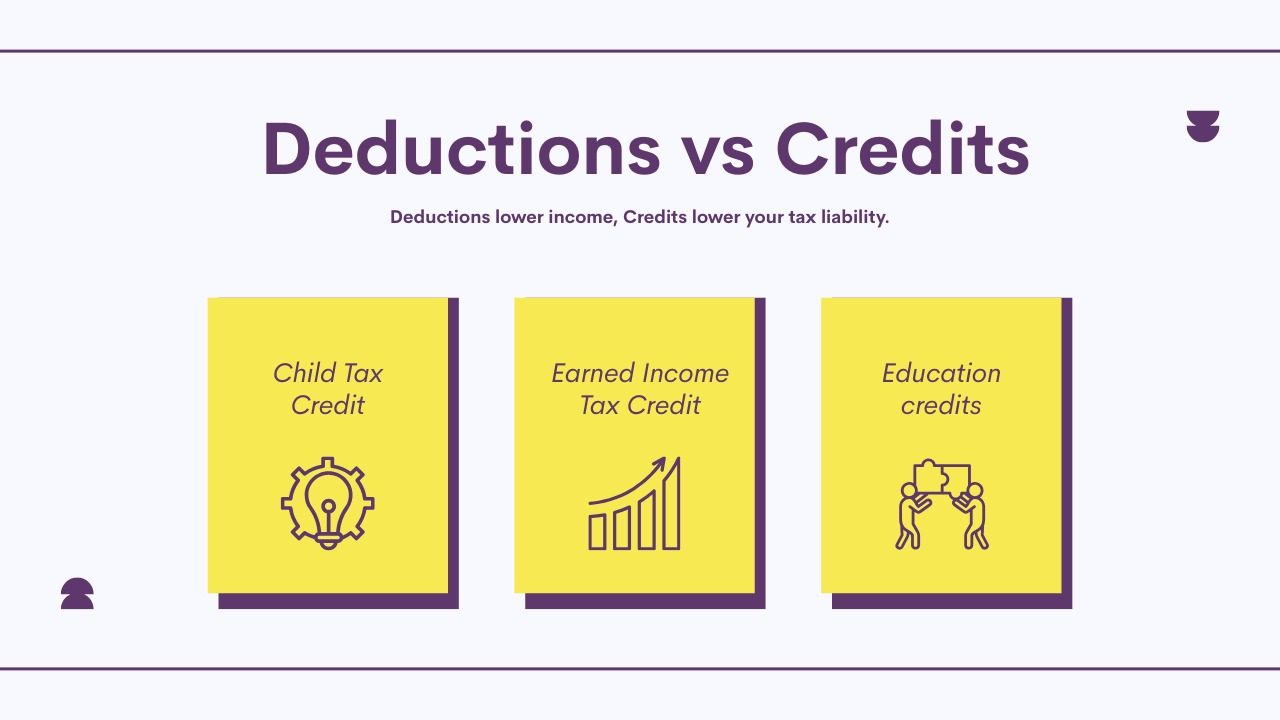
Top credits to claim alongside your deductions:
- Child Tax Credit
- Earned Income Tax Credit
- Education credits (AOTC / LLC)
Conclusion: Don't Leave Money on the Table
These 10 deductions could save you between $3,000 and $10,000, depending on your situation. The key is being proactive, not waiting until tax time. Prior to filing your return for 2025, make sure you carefully review this list. If you are unsure if you are eligible for any of the deductions, it is a good idea to consult a tax professional. In most cases, the cost of the professional's fee will be far less than the savings you'll benefit from by making sure you claim every deduction you are eligible for.
🧮 Ready to Calculate Your Taxes?
Use our free federal income tax calculator to determine your tax liability for 2025 and how these deductions may affect your tax return.
Calculate Your Federal Taxes →